
How Is a Customised Freight Wagon Developed? From Customer Requirements to Operation
October 15
Not every transport requirement can be met with a standard freight wagon. Sometimes a minor modification is enough, while in other cases a new technical solution is needed. Marek Fodor, Head of the Technical Team at Cargo Wagon, explains how the company adapts wagons to its customers’ needs.
What are the most common requests you receive from customers?
Customers rarely ask specifically for a customised wagon. Usually, they have a particular transport requirement and need a suitable solution. Our task is to find one, whether by using a wagon from our existing fleet, modifying it or developing a new design.
What information do you need to develop a suitable solution?
We need to know the type of cargo, its weight and volume, and how loading and unloading will take place. Based on this, we develop a technically and economically viable solution. Over the past year alone, we have modified approximately 300 wagons in this way.
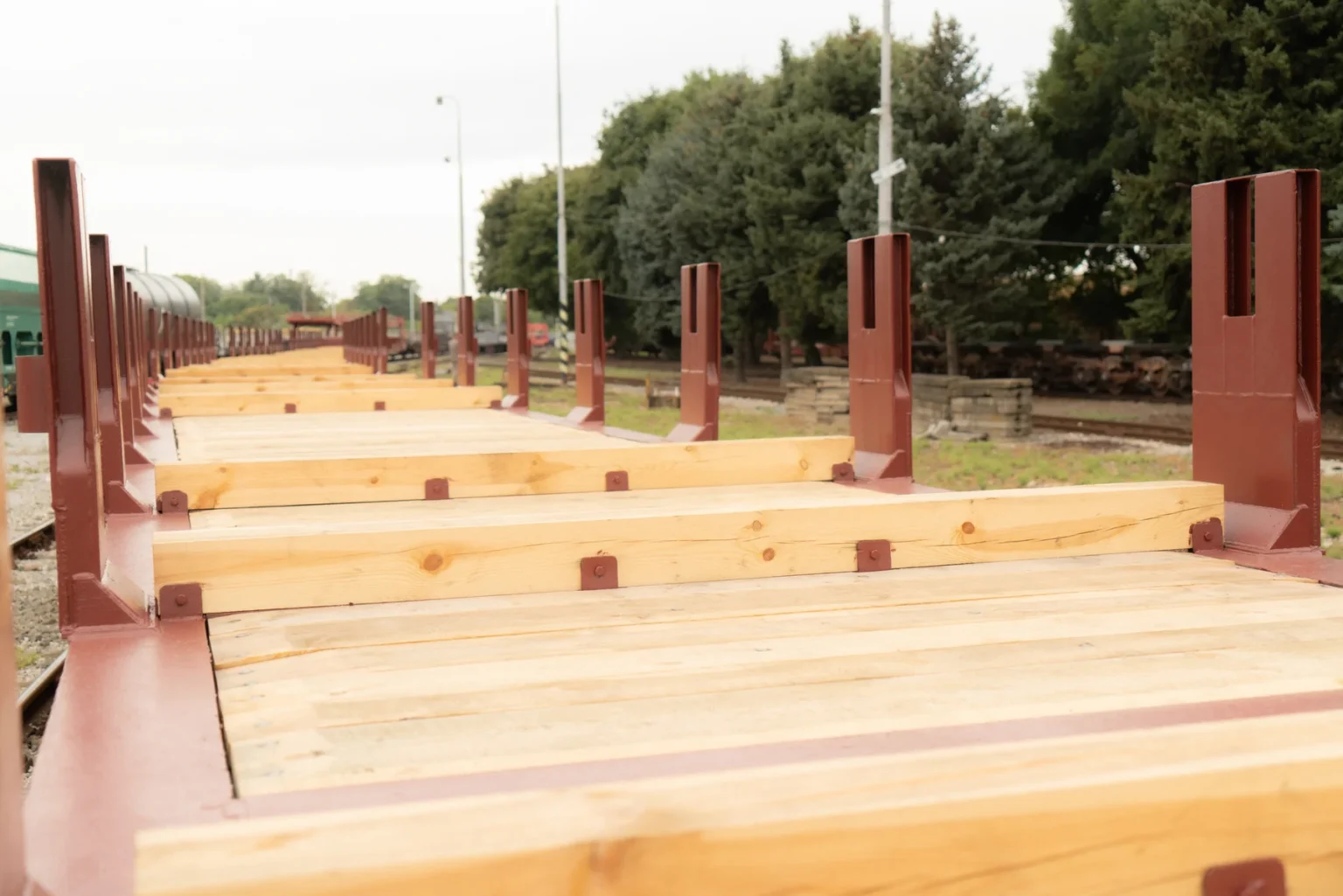
Examples include modified grain wagons for a Polish customer, reinforced Eas-z wagons for scrap metal transport for DB Cargo Czechia, and Sps flat wagons currently being modified to transport rails. In the latter case, the customer needed to transport 108-metre rails safely on a set of six coupled wagons. The modifications therefore included preparing the wagons for the installation of load-securing equipment, modifying the stanchions and replacing the wooden floor.
What does the process look like from the initial request to the finished wagon?
We start with a simple sketch and discuss how the wagon should function. Our engineers then prepare technical documentation and assess feasibility with the workshop. Every solution must meet technical and regulatory requirements, remain economically viable and meet the customer’s needs.
The next steps depend on the extent of the modification. For grain wagons, we replaced the opening roof with a fixed roof featuring loading openings, providing better protection against rain and moisture. This required cooperation with the manufacturer, Tatravagónka, which verified the technical solution and confirmed its safety.
The Eas-z wagons required a simpler modification. We replaced the original body panels with thicker steel plates to increase resistance to impacts and deformation during scrap loading. For the customer, this means fewer repairs and shorter periods out of service. We assessed the modification as having no negative impact on safety.
When do you know that a proposed solution has proved successful?
The real test comes during operation, particularly during the first loading and unloading operations and everyday use.
The Eas-z wagons required several minor adjustments during their first months in service. However, after the initial loading operations, customers confirmed that the solution met their needs.
After approximately three months, we inspect the wagons for signs of fatigue or other issues that may require further adjustments. This is how we identified the need for additional reinforcement of the end walls, for example. Customer feedback helps us improve both the wagons themselves and future projects.
Why can modifying an existing wagon be more advantageous than purchasing a new one?
Sometimes a suitable wagon type does not exist because new transport methods or market requirements are emerging. In other cases, it exists but is unavailable. Flat wagons, for example, are currently in high demand due to railway infrastructure construction.
Another advantage is the shorter delivery time. Manufacturing a new wagon can take several months or even up to two years, while an existing wagon can be modified much faster. This allows customers to respond more flexibly to new transport requirements.
Cost is another factor. Purchasing a new wagon is significantly more expensive than modifying an existing one. When comparing solutions, however, repair costs and downtime during operation also need to be considered.
The Eas-z wagons are a good example. Specialised scrap metal wagons are available, but their tare weight is approximately one to two tonnes higher. The lower tare weight of the modified wagons allows more cargo to be transported within the train’s overall weight limit.

What are the main limitations when modifying freight wagons?
Technically, almost anything can be modified. The main question is whether it makes technical and economic sense. The operational modifications we are discussing do not involve changes to the running gear, braking system, draw gear or buffers. More extensive modifications may also require a more complex approval process.
For older wagons, the main limitation is often the return on investment. Major rebuilding is therefore frequently uneconomical, while modifications to newer wagons can significantly extend their useful life and allow them to be used for other types of transport.
How have the modified wagons performed for your customers?
Initial feedback has been positive, although the first period of operation almost always reveals opportunities for minor improvements.
We follow the same approach with wagons featuring large doors for customers in France and Luxembourg. We first test the solution in operation, collect feedback and make adjustments before proceeding with series production.
Real-world experience helps us identify details that may not emerge during the design phase. The customer therefore receives a wagon adapted to the actual conditions of its intended use.